Oregon Water OnlineEnergy & hydropowerSalmon & rivers
Reducing rising water temps in lower Snake River
Restored from Oregon Water Online, the 2009–2016 news blog, as captured on July 11, 2015. The text is kept as published; many items were reposts of regional news, and their source line is kept at the end. Dead links and contact details have been removed.
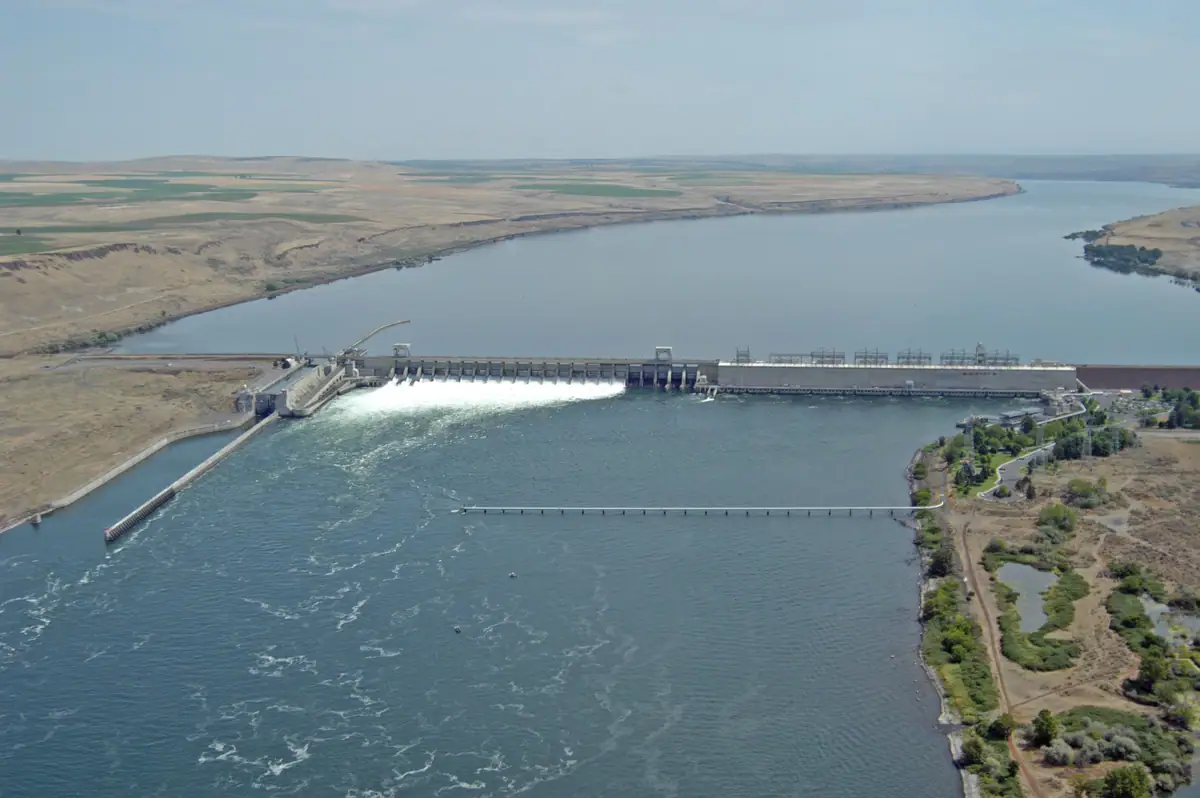
The settling in of this summer’s heat has forced salmon and hydro system managers to sprint through the steps of their plan for holding down water temperatures in the lower Snake River for migrating salmon and steelhead.
At a meeting July 15 of the Technical Management Team (TMT), it was decided water temperatures rising to 66 degrees F in the tailwater of Lower Granite Dam would trigger larger releases of cool water upstream at Dworshak Dam.
The idea was to allow a couple of days for the water to drift downstream and arrive at Lower Granite before temperatures could rise to 68 degrees. Higher temperatures are harmful to the migrating salmon and steelhead. The 66-degree threshold was reached last Friday, July 17, so Dworshak outflows were increased to about 12,000 cubic feet per second.
Central Idaho’s Dworshak Dam is on the North Fork of the Clearwater River, which flows into the Clearwater about 2 miles downstream and then into the lower Snake at the Idaho-southeast Washington border just at the head of Lower Granite’s reservoir.
The U.S. Army Corps of Engineers dam operators had since July 5 managed to keep Lower Granite tailwater temperatures well below 68 degrees by maintaining, for the most part, Dworshak’s maximum power house flows of 9.5 kcfs. The increase to 12 kcfs included full powerhouse and a mix of flows from the dam’s spill gates and its “regulating outlets,” openings about halfway down the face of the dam.
“We came in on Monday morning and saw that temperatures were still rising,” the Corps’ Dan Feil told the TMT Wednesday. So the Corps decided to lower the temperature of 12 kcfs outflows from 45 to 43 degrees. The TMT’s federal, state and tribal fish and hydro managers discuss day-to-day operations of the federal Columbia-Snake hydro system that might be implemented to benefit salmon and steelhead that are listed under the Endangered Species Act.
The tailwater temperature topped out at 67.7 degrees Tuesday and similar temperatures were expected to prevail Wednesday as Lower Granite awaited the arrival of the still cooler water from Dworshak Reservoir.
But with air temperature in the interior Columbia Basin, and elsewhere in the region, expected to continue to simmer at the very least into next week, a new battle plan was developed Wednesday. It was decided to drop Dworshak outflow temperatures from 43 to 41 degrees. “We’re going to implement that as soon as possible this morning,” Feil said. Such low temperatures are detrimental to fish being reared at Dworshak National Hatchery near the mouth of the North Fork, though not as harmful as using increased outflows from Dworshak to cool the lower Snake. The cold, cold water slows the growth of salmon and steelhead being raised at the hatchery, which draws in water from the North Fork.
Raising outflows from Dworshak would require increasing spill from near surface (50 feet) or from the ROs (about 250 feet below the surface). Both options stir up total dissolved gas in the river, which can also be harmful to fish at higher levels.
The reservoir’s coldest water is tapped by the ROs and the turbine units, which equipped with gates at various elevations that can be adjusted to bring through cooler water from deeper in the reservoir. The warmest outflow is through the spill gates. USFWS officials said they would prefer, for now, that the growth-slowing colder water be used to bring down Snake temperatures instead of greater volumes of TDG-producing spill.
“We’d rather give up some growth now and try to recapture that growth later in the fall” hatchery manager Mark Drobish of the U.S. Fish and Wildlife Service told the TMT. Raising the river’s TDG levels now would further stress young steelhead that are at present battling a viral outbreak. He said the hatchery operator would prefer that the 41 degree outflows not continue much past the first of the month.
Salmon managers prefer the 41 degree option because it would “conserve more water” in Dworshak’s reservoir for use later in the season, according to Russ Kiefer of the Idaho Department of Fish and Game. “If we’d gone to (14 kcfs) that would really cut down on what we can do later” should the heat wave persist through August.
The Snake River warming is exacerbated by the release of higher than normal volumes of water from the Idaho Power Company’s Hells Canyon Complex upstream of Lower Granite. The upper Snake basin was blessed with June precipitation that was as much as 300 percent of average. That filled reservoirs to capacity and dampened early season irrigation demand. That wealth of warm, relatively, water has to be passed through the system.