Oregon Water OnlineEnergy & hydropowerSnowpack, climate & forecasts
NOAA initiative to increase of domestic aquaculture output
Restored from Oregon Water Online, the 2009–2016 news blog, as captured on December 11, 2011. The text is kept as published; many items were reposts of regional news, and their source line is kept at the end. Dead links and contact details have been removed.
During a wet and cool April and May – a time when the Columbia River basin’s water stores usually begin to drain – estimated runoff volumes were boosted by more than 23 million acre feet of water, according to Bonneville Power Administration officials.
Peter Cogswell, Steve Oliver and Rick Pendergrass on Tuesday briefed the Northwest Power and Conservation Council on the current status of the Federal Columbia River Power System and how its dams are being operated to meet power generation, salmon protection, flood control and other demands in what is one of the highest runoff seasons in many years.
Low elevation meltdown has fueled high flows in recent weeks. But mid and high elevation snowpacks across the Columbia-Snake river continued building into the spring season and now hold in excess of 150 to 175 percent of average moisture content. “We expect that to come off here in the next six to eight weeks,” Pendergrass said.
“It is a very unusual occurrence” for the basin to experience such a period of sustained high flows. 2011 flows have been nearly as high as in 1997 when the highest runoff on record flowed down from the Snake and upper Columbia River.
The Northwest River Forecast Center’s June 7 final water supply forecast is for a runoff volume from April through September of 134 million acre feet past The Dalles Dam on the lower Columbia. That would be 136 percent of normal and the fourth largest volume on the 41-year record. The highest volume was 140.9 MAF in 1997, followed by 139.7 MAF in 1974 and 134.8 MAF in 1972.
The wet spring resulted in The Dalles forecast being boosted considerably. The April 7 final forecast was for 107 MAF, which would have been 108 percent of the 30-year average runoff during the April-September period.The Snake River basin is particularly laden. The new NWRFC forecast predicts 37.3 MAF will flush down from the upper Snake and past Lower Granite dam in southeast Washington. That would be 155 percent of average for the April-September period. Lower Granite is the fourth dam upstream from the Snake’s confluence with the Columbia.
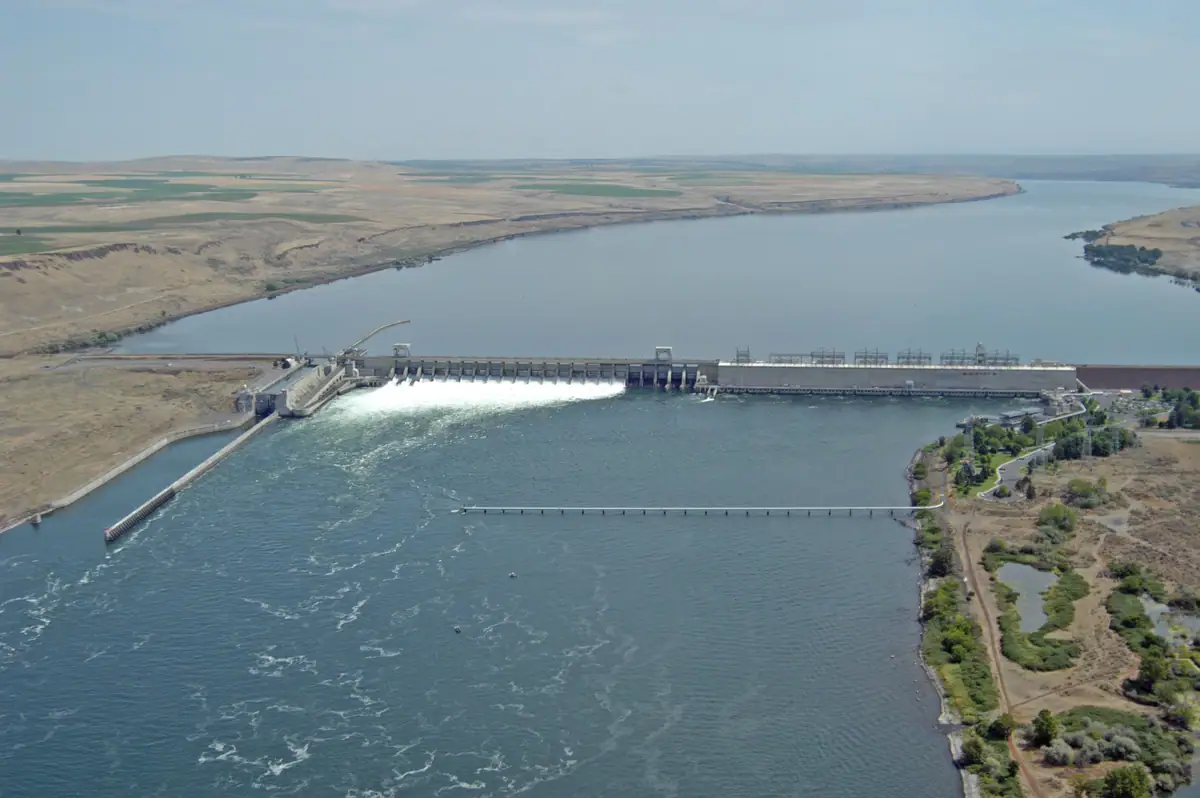
The reservoir backed up by Dworshak Dam in west-central Idaho is expected to receive 142 percent of its average inflows. Dworshak is on the North Fork of the Clearwater, which feeds into the Clearwater and then the Snake upstream of Lower Granite. Grand Coulee Dam inflows are predicted to total 80.4 MAF this year, which would be 126 percent of average.The high flows so far have forced dam operators to spill even more water to provide passage for juvenile salmon and steelhead headed for the ocean. Bonneville has since May 18 been forced to implement its new “environmental redispatch policy” for parts of all but two days.
The policy calls on non-hydro energy flowing into the transmission grid, including fossil-fuel and other thermal generation and wind energy, to be partially and temporarily limited so that hydro production can be maximized during low power demand periods. Running more water through the turbines reduces the volume that has to be spilled. Spill stirs up “total dissolved gas,” which can be harmful to fish.
A total of 59,313 megawatt hours of energy had been displaced as a result of the redispatches, Pendergrass said. With an uptick in Snake River runoff, much of the responsibility for holding down flows past Bonneville Dam has been shifted to the mid-Columbia’s Grand Coulee Dam in central Washington.